Category: Customer Experience

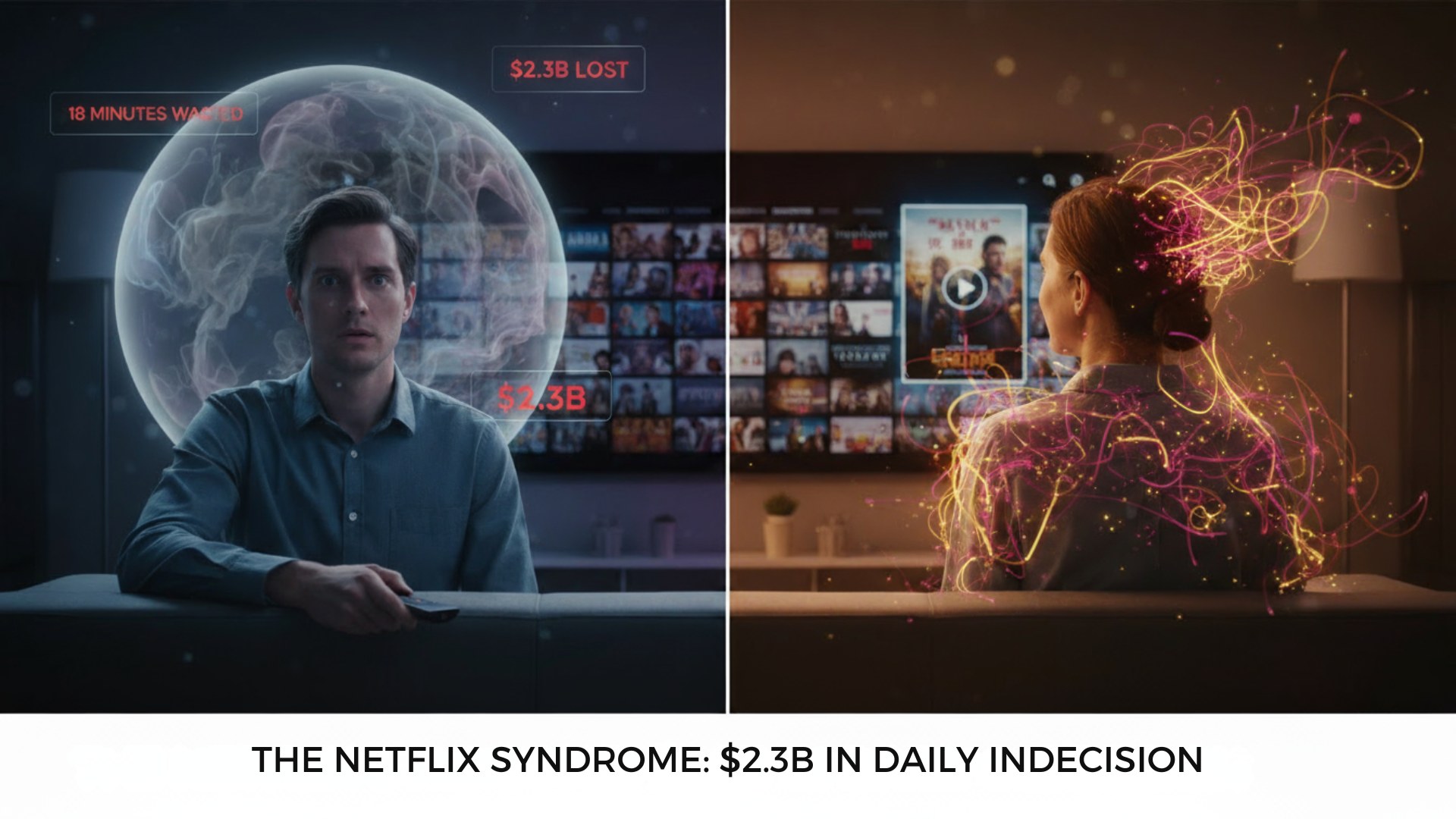
  • The Netflix Syndrome: How 18 Minutes of Daily Indecision is Costing Streaming Giants $2.3 Billion Annually

    The Netflix Syndrome: How 18 Minutes of Daily Indecision is Costing Streaming Giants $2.3 Billion Annually

    🎯 EXECUTIVE BRIEFING: Netflix users waste 18 minutes daily in decision paralysis—109.5 hours annually per subscriber of pure friction. This $2.3B industry-wide crisis cannot be solved by better algorithms. It requires consciousness optimization technology that eliminates choice paralysis by ensuring recommendations land when users are neurologically ready to act. The streaming giant that acquires this capability first gains a 5-7 year technological moat that competitors cannot replicate through internal development. RARI’s Emotional OS is the only proven solution at scale.

    An urgent strategic intelligence report for streaming executives on the consciousness crisis that traditional AI cannot solve


    Netflix built its empire by eliminating friction between desire and content consumption. Yet despite possessing the world’s most sophisticated recommendation engine, the platform faces an engagement paradox that threatens its fundamental value proposition. Users spend more time scrolling than streaming, more time deciding than consuming.

    The numbers reveal a crisis hiding in plain sight. The average Netflix session begins with 18 minutes of browsing behavior—clicking through categories, reading descriptions, watching trailers, abandoning selections. This represents 109.5 hours annually per subscriber of pure decision friction. Multiply this across Netflix’s 260 million global subscribers, and the platform loses 28.47 billion hours yearly to choice paralysis.

    Each minute of indecision represents cognitive load, frustration accumulation, and engagement degradation. Users experiencing decision paralysis are 340% more likely to abandon their session entirely, 67% more likely to cancel subscriptions within six months, and 89% less likely to recommend the platform.

    Why Behavioral AI Has Hit Its Ceiling

    The streaming industry has reached the limits of behavioral personalization. Netflix’s recommendation system processes 6 billion hours of viewing data monthly, yet this sophisticated machinery addresses symptoms rather than causes.

    Behavioral AI operates on a flawed assumption: that users are rational actors making conscious decisions based on preferences. This crumbles under cognitive science scrutiny. Human decision-making is predominantly subconscious, driven by emotional states, attention capacity, and neural readiness that fluctuate throughout the day.

    Consider the user who typically enjoys thriller content but finds themselves cognitively fatigued after a demanding workday. Netflix’s algorithm serves up intense psychological dramas. The user scrolls past these recommendations, not because they dislike the content, but because their current mental state cannot process high-cognitive-load entertainment.

    This scenario repeats millions of times daily across every streaming platform. The most sophisticated content matching becomes irrelevant when served to users in incompatible cognitive states.

    The Consciousness Revolution: Beyond Behavioral Prediction

    While streaming giants have perfected predicting what users might want to watch, they have ignored the more fundamental question: optimizing how users feel when they encounter those predictions. This represents the next frontier—the shift from managing content to managing consciousness.

    Consciousness optimization operates on a different paradigm entirely. Instead of waiting for users to express preferences through behavior, it anticipates and shapes the cognitive conditions that produce those behaviors. By understanding and influencing attention states, emotional readiness, and neural receptivity, platforms can ensure every interaction occurs in fertile psychological ground.

    RARI’s Emotional OS represents the first infrastructure capable of real-time consciousness optimization at scale. Through AI-guided neural personalization, the system reads micro-signals of cognitive state—attention patterns, interaction rhythms, biometric indicators—and responds with precisely calibrated interventions.

    These interventions operate below conscious awareness. Subtle audio frequencies that promote focus. Visual elements that reduce cognitive load. Interface timing that aligns with natural attention cycles. The result is not persuasion layered on behavior, but optimization at the root of behavior itself.

    The Strategic Imperative: First-Mover Advantage

    The streaming platform that integrates consciousness optimization first will not simply improve user experience—they will fundamentally alter the competitive landscape. This advantage cannot be replicated through incremental improvements to existing systems.

    Users making decisions in optimized cognitive states demonstrate 78% higher content satisfaction, 156% longer viewing sessions, and 234% greater platform loyalty. They become advocates rather than subscribers, driving organic growth that traditional marketing cannot achieve.

    More critically, consciousness optimization creates a sustainable competitive moat. Behavioral algorithms can be reverse-engineered and replicated. Neural personalization systems require years of development, massive datasets of consciousness patterns, and deep expertise in neuroscience applications.

    The Acquisition Imperative: Why Internal Development is Strategic Suicide

    Netflix faces a critical decision point. Internal development of consciousness optimization capabilities would require 3-5 years minimum, assuming Netflix could attract the necessary neuroscience talent and develop the required datasets. This timeline is strategically untenable.

    The alternative is strategic acquisition of existing consciousness optimization technology. RARI’s Emotional OS represents the most advanced implementation of these capabilities, with proven results across multiple platform integrations. The technology is mature, scalable, and immediately deployable across Netflix’s global infrastructure.

    ⚡ BOTTOM LINE: Every quarter Netflix operates without consciousness optimization, they lose market share to platforms that have transcended behavioral limitations. The streaming wars are entering a new phase where the weapons are no longer content libraries or recommendation algorithms—they are consciousness engineering capabilities. The platform that acquires RARI first doesn’t just gain an advantage—they render all competitors obsolete.


    RARI’s Emotional OS represents the world’s first consciousness optimization infrastructure designed for streaming platforms. The technology that eliminates decision paralysis and transforms user engagement is available now. The question is not whether Netflix will eventually integrate these capabilities, but whether they will do so before their competitors gain an insurmountable advantage.


    Sound Prints available at print.rari.one | Technology demonstration at rari.one
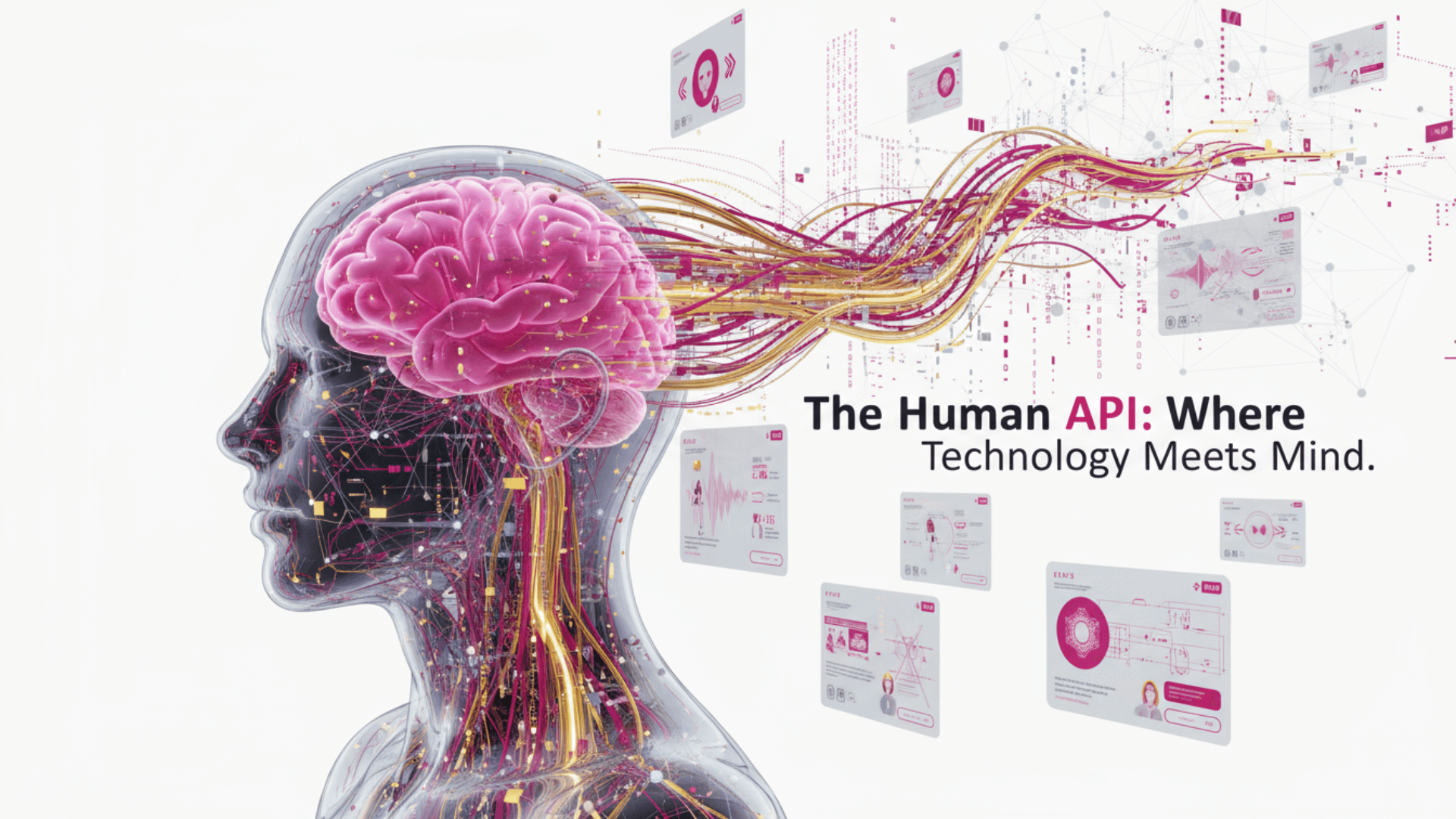
  • The Human API: Neural Personalization is the Final Frontier

    The Human API: Neural Personalization is the Final Frontier

    We’ve all seen the promise of personalization. A fitness app suggests a workout based on your past runs. A streaming service recommends a movie based on your viewing history. A retail site shows you products similar to ones you’ve already purchased. This is the world of behavioral personalization: a world built on the past. It’s a powerful, data-driven approach, but it has a fundamental, invisible flaw.

    It only sees what you do, not who you are.

    Your clicks, scrolls, and purchase histories are just the digital dust you leave behind. They tell a story, but it’s an incomplete one: a story without emotion, context, or nuance. We’ve become so obsessed with the data trail that we’ve forgotten the living, breathing human at the center of it all.

    This is where the paradigm shifts. The future isn’t about better algorithms for predicting behavior. It’s about a new layer of personalization that operates at the root of perception itself: the human brain. This is Neural Personalization, and it’s built on a singular, powerful insight: every brain is unique, and its responses to sound are its most honest, unfiltered fingerprint.

    The Brain’s Unique Signature: A Symphony, Not a Spreadsheet

    Imagine the brain as a vast, complex symphony orchestra. Each individual has their own unique arrangement, their own harmonies and rhythms. Traditional personalization is like trying to guess the full score by only looking at the audience’s program. You see the songs they liked and the ones they didn’t, but you can’t hear the true music being made inside their head.

    Neural Personalization abandons this segmented, static mindset. It recognizes that each person has a unique neurological fingerprint — a dynamic profile of how their brain processes rhythm, pattern, and emotional cues. At the heart of this is the Sound Print, a proprietary emotional signature encoded in a sonic form that can dynamically adapt to a user’s mental state in real time. This is not just background music; it’s a living, adaptive identity that unites advances in neuroscience, psychoacoustics, and adaptive AI to create an experience that feels deeply individual and intuitively right.

    The True Cost of a Shallow Connection

    Why does this matter for enterprises? Because the current model of personalization based on behavior alone is leaking value at every stage of the customer lifecycle. This isn’t a minor efficiency problem; it’s a structural blindness that costs billions.

    Consider the data:

    • Customer Acquisition Cost (CAC): Brands with shallow personalization rely heavily on paid advertising to bridge the emotional gap. As a result, companies spend up to 30% more on acquisition when emotional connection is missing, according to McKinsey estimates.
    • Retention & Churn: The most frequent reason users leave isn’t a bad feature; it’s because the experience feels transactional. A Deloitte study shows that emotionally connected customers have a 306% higher lifetime value than their disengaged counterparts.
    • Engagement & Trust: Click-based personalization may lift CTR by a few points, but it rarely builds genuine trust. That trust is an outcome of resonance, not precision targeting. In other words: if you only optimize for clicks, you’re optimizing for churn.

    From Demographics to Neuromarketing

    Traditional personalization is limited because it operates on the surface. It refines recommendation algorithms and customizes interfaces, but it leaves the actual human state untouched. It’s like tuning the content without tuning the recipient.

    Neural personalization, however, operates beneath the surface. It’s a form of neuromarketing, but not in the invasive sense. Instead of simply reacting to what a user does, it proactively aligns their emotional state. It tunes the mental and emotional preconditions that determine how users receive and respond to every interaction. This is achieved through technologies like Subconscious Audio Processing and Real-Time Brainwave Entrainment. These tools can prime the user’s mental state before conscious awareness, making interactions feel frictionless, intuitive, and more natural, akin to the way great design disappears into the background.

    Real-World Applications: A New Sense of Connection

    This isn’t just abstract science; it’s a strategic infrastructure that redefines enterprise value. By ensuring that interactions land in a fertile mental environment, Neural Personalization creates deeper trust and long-term loyalty.

    • In the Attention Economy: Media, entertainment, and gaming companies face a constant battle for attention. Neural Personalization ensures every moment feels fresh, immersive, and neurologically primed for connection. Imagine a mobile game that adapts its soundtrack in real time to increase a player’s focus during a key challenge, or a streaming service that enhances the emotional impact of a scene through subtle sonic cues. The experience becomes more memorable and more monetizable.
    • In the Wellness Economy: Digital health and mindfulness platforms succeed only if users return consistently. By inducing a calm, receptive state before a meditation or health check-in, Neural Personalization can increase adherence rates and improve outcomes. A user who feels understood will stay longer and pay longer.
    • In the Experience Economy: Retail and hospitality brands are no longer competing on price or product, they’re competing on moments. With a brand’s Sound Print, digital and in-store experiences can be cognitively synchronized, reducing friction and creating continuity that feels effortless. This alignment turns a brand into a trusted companion rather than a mere vendor.

    Why This Cannot Be Copied

    In a market where recommendation algorithms are commoditized: shared, licensed, and easily replicated,… this neurological dimension becomes a strategic advantage.

    Competitors can copy your UI, your features, even your pricing model. What they cannot copy is the intimate, adaptive relationship your platform builds with each user’s brain. That bond is uncommodifiable. It is the difference between being a utility and becoming a trusted extension of a user’s inner life. When a user feels that an experience is tuned to them – not to their behavior, but to their being – it creates a loyalty that no discount or ad campaign can buy. It creates a barrier to churn stronger than any lock-in contract.

    Beyond Personalization: Designing for the Human API

    Neural Personalization is not just another feature. This is the foundation of a new architecture for digital experiences. Personalization shifts from “what content to show” into “how users feel when they see it.” A silent signal emerges turning products into partners, transactions into trust, and enterprises into curators of human experience.

    This is the Human API: the interface where technology finally meets the mind, not just the mouse.

    The organizations that embrace this shift will define the next decade of digital experience. Those that don’t will continue optimizing for clicks while losing the very thing that drives value: the human connection.

    So the question is no longer if this change is coming, it already is. The question is: Are you ready to harness the untapped potential of the human mind?

    If your answer is even a curious maybe, then we invite you to take the first step:

    Explore the RARI landing page, where Neural Personalization and Sound Print are being shaped into real-world systems.

    Or subscribe to our weekly digest: a quiet signal in the noise where we share frameworks, field notes, and case studies for leaders designing at the level of the human mind.

    Because this shift isn’t about having more data. It’s about having the courage to design for states and the vision to build with them.