Introduction
Over the past decade, streaming platforms have perfected the art of usability. Every pixel, animation, and swipe has been tuned for efficiency. Users can find, play, and skip with almost no friction. The interfaces are clean. The experiences are instant. And the design teams have done what they set out to do, make content delivery effortless. But there’s an uncomfortable paradox in that success:
As the experience becomes smoother, it also becomes emptier.
People aren’t leaving because of bad interfaces. They’re leaving because nothing feels worth staying for.
In the relentless pursuit of optimization, streaming giants have built platforms that function flawlessly but feel interchangeable. The difference between one app and another is no longer emotional, it’s merely logistical. Faster loading times, smarter recommendations, cleaner layouts. Each improvement makes the system more efficient, but not more memorable. Each optimization brings us closer to utility, and further from connection.
The data reflects it clearly. Even as engagement metrics rise, loyalty continues to decline. Subscriptions are cancelled, users rotate between platforms, and no amount of new content can permanently anchor them. Behind every churn percentage is a psychological truth: human attention doesn’t attach to speed, it attaches to meaning.
The business consequence is severe. When users aren’t emotionally invested, they act rationally: comparing prices, switching plans, chasing promotions. Emotional differentiation, once the invisible moat of great entertainment brands, has eroded into algorithmic sameness.
This is the silent crisis of the streaming economy:
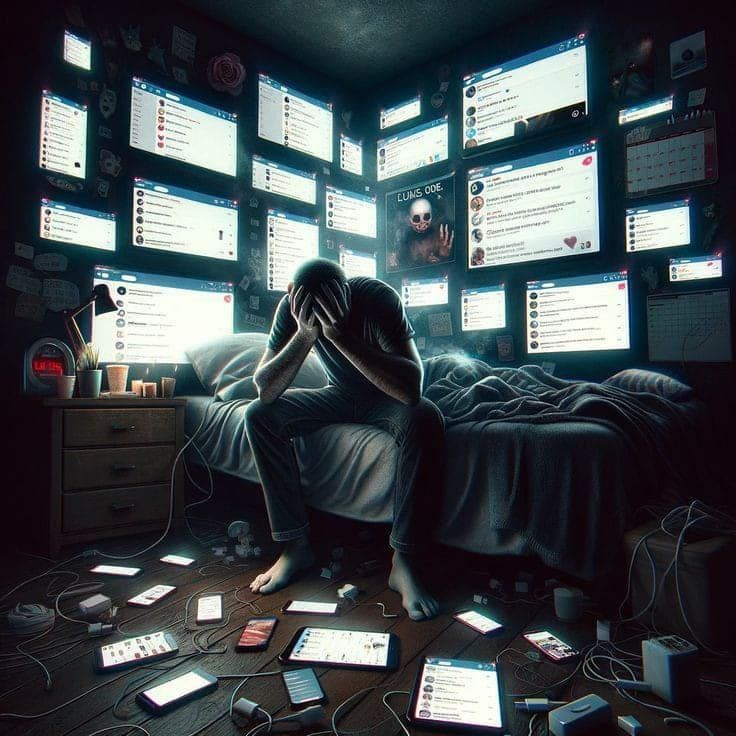
Platforms have maximized usability at the cost of memorability. They’ve optimized everything users touch, but not what touches users back.
And that raises a more existential question for the decade ahead:
When utility has been perfected, what’s left to compete on?
Why UI/UX Optimization Isn’t Enough
Streaming platforms have spent years perfecting speed, navigation, and recommendations. These changes boost initial engagement. But recent studies show that satisfaction with UX alone doesn’t guarantee long-term retention or loyalty.
A 2025 study in Frontiers in Psychology examined factors influencing user satisfaction and continuation intention in music streaming. The study found that while system quality and ease of use drive satisfaction, long-term retention depends far more on service quality and emotional connection than on sleek interfaces.
Another paper, “Determinants of User Retention in Streaming Services: The Role of Content Library and User Experience,” surveyed nearly 500 streaming service users. It revealed that while a large content library and good UX are necessary, they only drive retention when combined with perceived uniqueness and relevance of content. If your service feels like “just another option,” it becomes trivial for users to switch.
Hence, when every global streaming platform matches in interface polish and recommendation speed, those are no longer sources of differentiation. They become hygiene factors — essential to compete on, but not enough to build attachment. In such an environment, emotional resonance (why the experience feels meaningful) becomes the variable that separates average churn from sustainable loyalty.
The Financial Trap
Behind the polished interfaces and billion-dollar recommendation engines lies a brutal economic reality: most streaming platforms are structurally unprofitable. Their growth may look impressive on the surface: millions of new users, soaring play counts, global reach… but underneath the numbers, margins are collapsing. The business model that once revolutionized access to content has now trapped itself in an endless cycle of scale without sustainability.
At the heart of this trap is the royalty system. On average, nearly **70% of streaming revenue flows directly to content rights holders:** labels, publishers, and distributors. That leaves barely a third to cover everything else: platform operations, infrastructure, marketing, innovation, and profit. In practice, it means that for every dollar earned, only a few cents remain to fund differentiation. The result is predictable: the bigger the catalog, the thinner the margin.
This structure creates a paradox of growth:
The more successful a platform becomes, the more users it attracts, the more streams it serves, the more it owes in royalties.
This cost structure forces platforms into one of two paths: invest heavily in content (which increases royalty payments) or lower costs elsewhere, neither of which solves the loyalty problem. Original content is expensive to produce; exclusive licensing drives up costs. A recent theoretical model in MDPI shows that platforms providing more original content see higher subscriber uptake but risk falling into expensive licensing agreements with advertisers or having to subsidize content heavily.
Meanwhile, global music streaming revenues in 2022 generated 67% of recorded music revenue worldwide, yet premium subscriptions only accounted for ~48.3% of that share; the rest came from ad-supported tiers and other sources, indicating a lean margin on many users.

The financial trap is therefore double-edged: platforms pay high royalties, compete on content size, AND fight to keep churn low in environments where emotional loyalty is weak.
Without breaking this cycle, for example, by creating offerings that reduce the dependency on content licensing costs, or by building emotional attachment that increases lifetime value, many platforms risk being stuck in the low-margin + high-churn loop.
The Neuroscience of Sound & Memory
After years of chasing efficiency, the streaming industry has reached a paradox. Platforms have become faster, smarter, and more intuitive than ever, yet user loyalty continues to decline. The issue is no longer one of performance — it is one of connection. In the pursuit of frictionless experiences, platforms have stripped away the very thing that makes human engagement last: emotion. To understand why, we need to look beyond interfaces and into the brain itself.

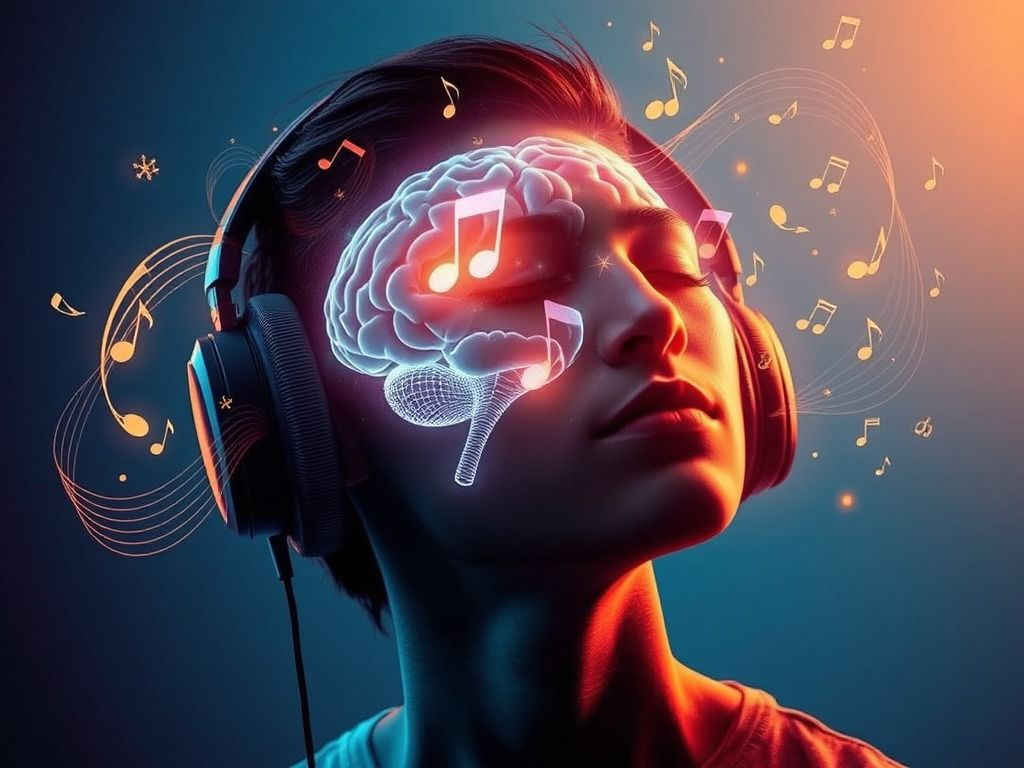
Neuroscience reveals that emotion and memory are not abstract experiences; they are biological processes deeply tied to sound. While visuals dominate most digital strategies, the human brain prioritizes auditory input when forming and retrieving memories. This happens because sound reaches the limbic system (the brain’s emotional and memory center) before visual information is even processed by the cortex. In practical terms, this means that sound bypasses rational filtering and goes straight to feeling. A familiar melody, a specific tone, even a subtle auditory cue can instantly transport a person back to a specific place, moment, or emotional state.
Studies have consistently validated this phenomenon. Research published in Frontiers in Psychology found that emotionally charged music triggered involuntary memories with greater clarity and emotional depth than visual stimuli. Another study in Scientific Reports (2023) confirmed that music-evoked memories were not only more vivid but also more personally meaningful and long-lasting compared to other sensory triggers. Neuroscientists describe this as auditory encoding bias — the brain’s natural preference to store and retrieve experiences linked to sound. These findings highlight a simple but profound truth: humans do not just hear sound; they feel it, store it, and relive it.
From Emotion to Connection — The Business Implication
This emotional encoding explains why a song can bring someone to tears decades later, while a photograph of the same moment might leave them unmoved. Sound reconstructs the emotional context of memory: the atmosphere, the tension, the joy, the nostalgia. It recreates the feeling, not just the image. From a business perspective, this insight changes everything. If sound has the power to reactivate emotional memory, then it also has the power to shape brand attachment. Loyalty, after all, is not built through convenience or interface design; it is built through repeated emotional recognition.
Streaming platforms are uniquely positioned to harness this dynamic. Unlike social media or visual-based platforms, their core medium — sound — already speaks the brain’s emotional language. Yet most continue to treat it as content, not connection. Algorithms still focus on predicting behavior rather than evoking meaning. Personalization engines recommend “what you might like” but rarely capture why you love it. This is where the opportunity lies: by designing experiences that intentionally trigger emotional recall through sound, platforms can create durable, identity-level attachment.
In that sense, the future of streaming is not about who owns the most content, but about who owns the most meaning. The platform that learns to embed emotion into sound, and sound into memory will hold something far more valuable than attention: enduring connection.
The Future of Streaming: Competing on Emotional Connection
By the end of this decade, content volume will no longer be a competitive advantage. Every major platform will host millions of tracks, films, and podcasts, all delivered through near-identical recommendation systems. The barriers to entry that once defined leadership: catalog size, exclusive rights, algorithmic precision… are dissolving under the weight of technological parity. When everyone can deliver infinite content, the differentiator will no longer be what users can access, but how those experiences make them feel.
In this new landscape, emotional connection becomes the most defensible business moat. Platforms that master the psychology of sound and memory will build relationships that can’t be replicated through licensing deals or interface design. Neuroscience has already shown that emotional engagement drives stronger memory formation and higher value perception — the same mechanisms that underlie brand loyalty in every other industry. In streaming, this translates directly into reduced churn, increased lifetime value, and a shift from transactional engagement to emotional retention.
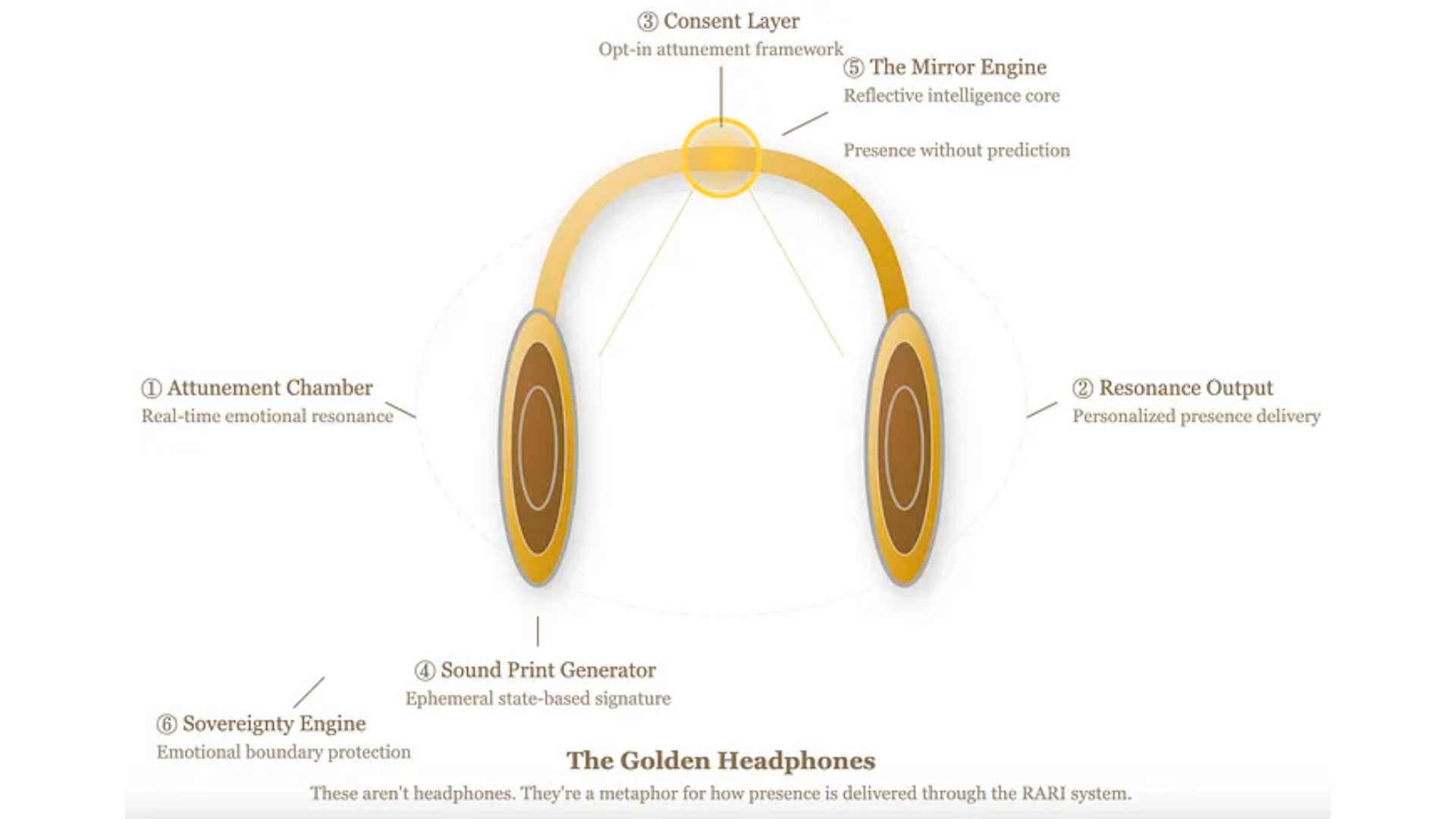
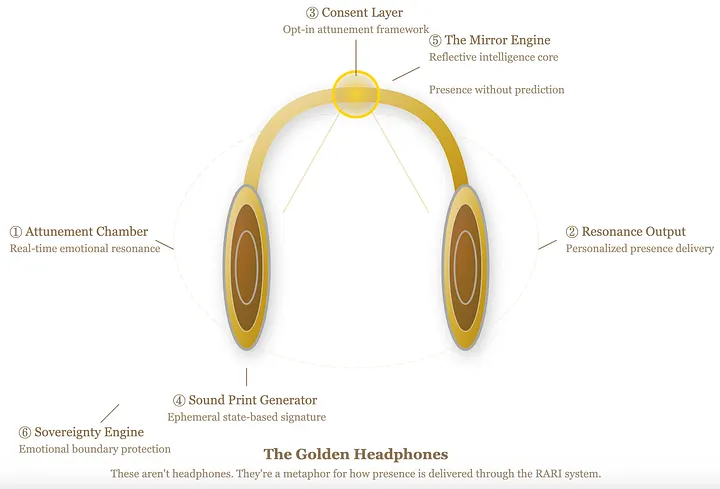
The emerging concept of the Emotional OS captures this transformation. It reimagines the streaming platform not as a distribution engine but as a living, adaptive emotional interface that learns the listener’s subconscious patterns and responds in real time to their cognitive and emotional states. Instead of optimizing playlists for consumption, it curates experiences for resonance. Instead of predicting preference, it personalizes connection.
For the first time, technology and emotion are converging into a single strategic layer where business growth aligns with human experience. Integrating an Emotional OS doesn’t just enhance user satisfaction; it redefines the economics of retention. Each emotionally resonant interaction becomes a micro-moment of loyalty. Each personalized soundprint becomes an anchor point of identity. Over time, these accumulated emotional moments form an invisible moat around the brand that no discount or exclusive deal can replicate.
The platforms that act first will shape the industry’s next decade. Just as data-driven personalization defined the 2010s, emotion-driven resonance will define the 2030s. Those who invest early in emotional infrastructure — decoding how sound builds meaning, will set the new standard for what a “streaming experience” means. The future of entertainment will not belong to the platforms with the biggest catalogs, but to those capable of creating the deepest human connection.
Conclusion
The streaming industry was built on the promise of access: unlimited content, anytime, anywhere. But in fulfilling that promise, it has stripped away the mystery, intimacy, and emotion that once made music and storytelling feel sacred. The platforms that once revolutionized discovery have become utilities: efficient, indispensable, but emotionally hollow.
The next frontier is not technological, but emotional. The Emotional OS represents a shift from utility to humanity, from serving content to nurturing connection. It transforms streaming platforms into ecosystems that mirror the way people actually experience sound: as memory, as emotion, as meaning.
Those who embrace this shift will not only survive the commoditization of content but transcend it. They will redefine loyalty from a metric into a feeling. They will turn engagement into attachment, and consumption into memory.
The winners of the next era won’t be those who own the most content, but those who make users feel something unforgettable.
To explore deeper insights, research, and case studies on how emotion reshapes engagement at RARI Emotional OS → https://www.rari.one/